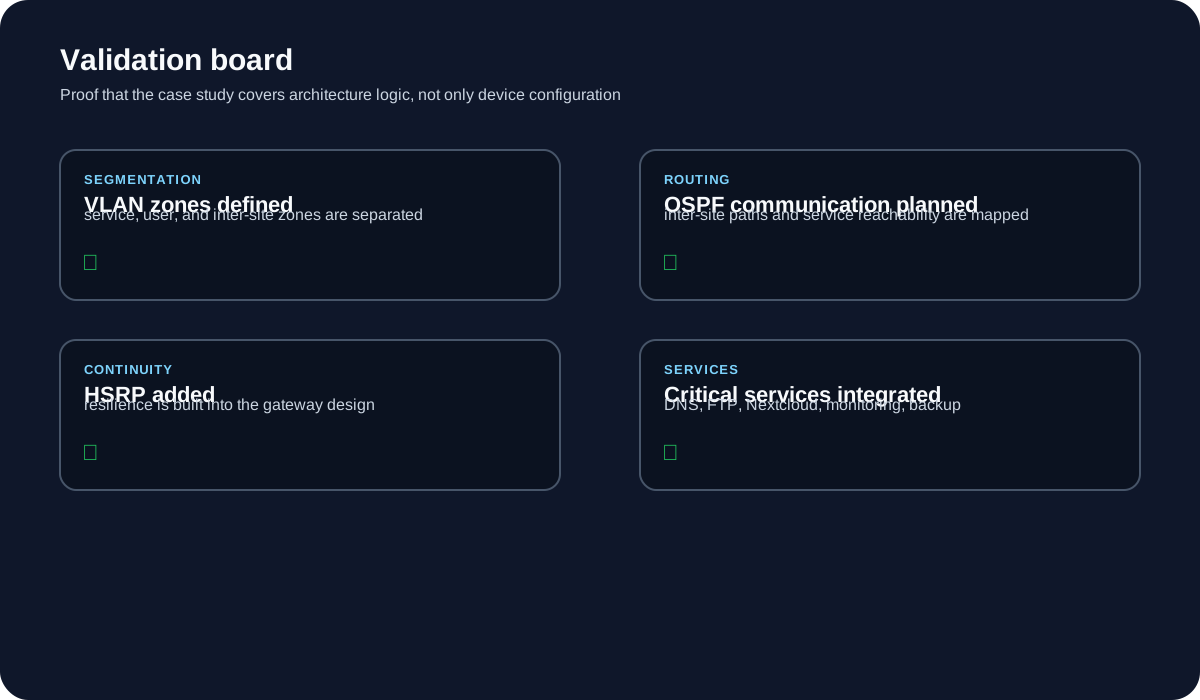
Worked on the network architecture with VLAN segmentation, routed interconnection, and service placement.
Secure Multi-Site Hospital Network Infrastructure
Network and systems case study for a hospital environment: VLAN segmentation, dynamic routing, redundancy, ACLs, critical services, monitoring, and backup logic.
Key highlights
- Designed the project as an infrastructure case study, not only as a router configuration exercise.
- Combined segmentation, routing, redundancy, ACL filtering, critical services, monitoring, and backup thinking.
- Documented both what worked and what remained limited, especially around replication and backup strategy.
ContextBUT R&T network infrastructure project for a hospital scenario
Core designCore / distribution / access architecture with segmented services
ContinuityHSRP gateway redundancy, monitoring, and backup/PRA thinking
Honest limitContinuous database replication was not fully achieved; backup automation was used instead
What I handled
Configured or documented OSPF routing, HSRP gateway logic, STP, and ACL rules across the lab topology.
Integrated infrastructure services such as DHCP, DNS, Apache/web, Nextcloud, Zabbix, HAProxy, PostgreSQL, and Active Directory into the design.
Connected the technical configuration to operational topics: service access, supervision, backups, and disaster-recovery thinking.
Results & evidence
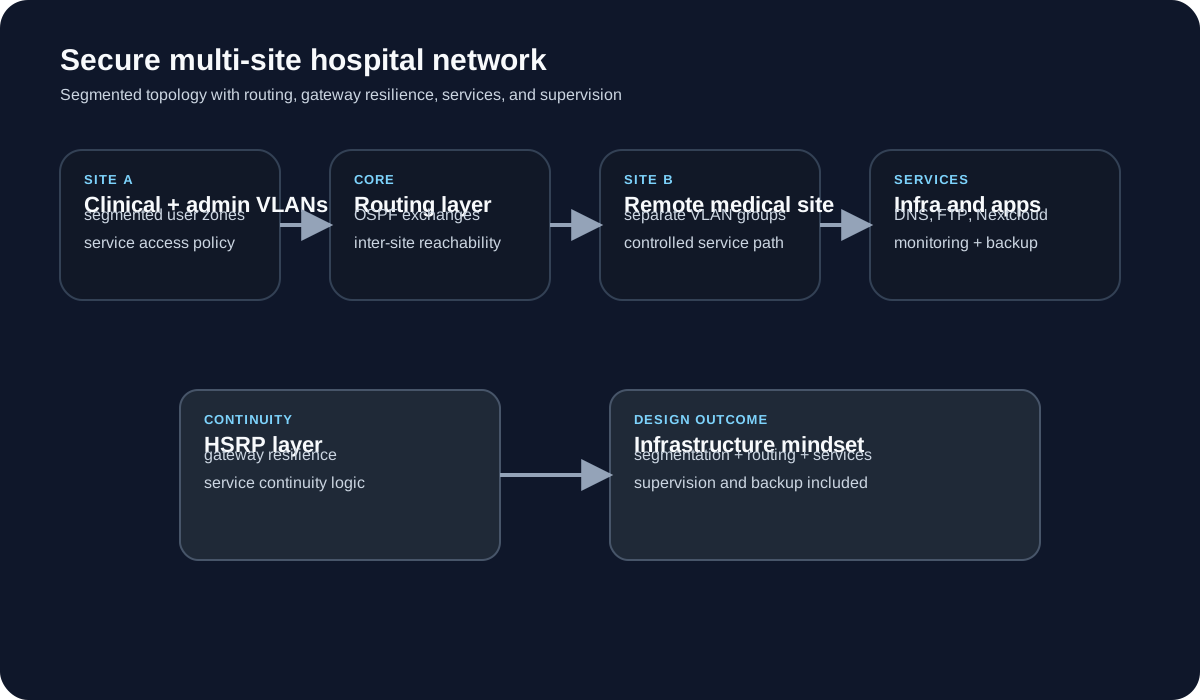
Topology overview
Timeline
Design the architecture
Define the hospital context, service needs, segmented zones, and core/distribution/access logic.
Configure network behavior
Work on VLANs, routing, HSRP, STP, and ACL rules to control reachability and resilience.
Add services and operations
Place infrastructure services, monitoring, backup logic, and PRA-oriented reasoning in the final documentation.
Overview
This project is a network and systems infrastructure case study based on a hospital scenario. The goal was to design a reliable and secure network for hospital services, not just to make a few devices ping each other.
It is one of the strongest academic projects in my portfolio because it combines network architecture, segmentation, routing, redundancy, critical services, monitoring, and backup/PRA reasoning.
Context
The project report describes a hospital network for Créteil with practical needs such as patient file access, appointment management, automatic network configuration, and service availability.
The design includes a core / distribution / access architecture, then adds technical controls around service reachability, segmentation, monitoring, and continuity.
What I worked on
The project included:
- VLAN-based segmentation
- OSPF routing
- HSRP gateway redundancy
- STP for switching resilience
- ACLs on routers to control access between VLANs and services
- DHCP, DNS, web/Apache, Nextcloud, Zabbix, HAProxy, PostgreSQL, and Active Directory services
- backup and disaster-recovery thinking using cron/rsync-style automation
Architecture / approach
The infrastructure was designed around separated network zones and critical services. Instead of keeping all users and services on a flat network, the design distinguishes user groups, server services, and inter-site communication paths.
This makes the project more realistic because hospitals need more than connectivity. They need controlled access, service continuity, monitoring, and recovery planning.
Technical decisions
Segment before opening access
The design starts with segmentation, then opens only the traffic that is required. ACL rules were used to protect sensitive services such as the database while still allowing necessary application access.
Use dynamic routing and gateway resilience
OSPF was used to manage routed exchanges, while HSRP added gateway redundancy. That combination shows continuity thinking, not only basic routing.
Add operational services
The report includes services such as Nextcloud, Zabbix, HAProxy, PostgreSQL, and Active Directory. That is important because a portfolio project should show infrastructure logic, not only isolated network commands.
Proof available
The archive contains the final SAE21 report, including the functional study, protocol choices, server descriptions, network configuration, ACL sections, and PRA analysis.
Useful proof to publish later:
- cleaned topology screenshots
- selected ACL examples
- service-access validation screenshots
- monitoring or backup proof
- a short sanitized extract of the PRA section
Results
The project demonstrates a solid infrastructure mindset:
- network segmentation
- routed inter-site access
- resilience with HSRP/STP thinking
- service placement and access control
- operational awareness through monitoring and backups
Limits and improvements
The report is honest about one important limitation: continuous database replication was not fully achieved. The backup strategy using automation tools was used as a more realistic fallback in the project context.
Future improvements would include cleaner replication testing, stronger service hardening, more polished diagrams, and more direct screenshots of validation steps.
What this project demonstrates
- practical networking foundations
- systems and service awareness
- security-by-segmentation mindset
- ability to document infrastructure work
- honest handling of technical limitations
Validation board